
Last updated October 16, 2026
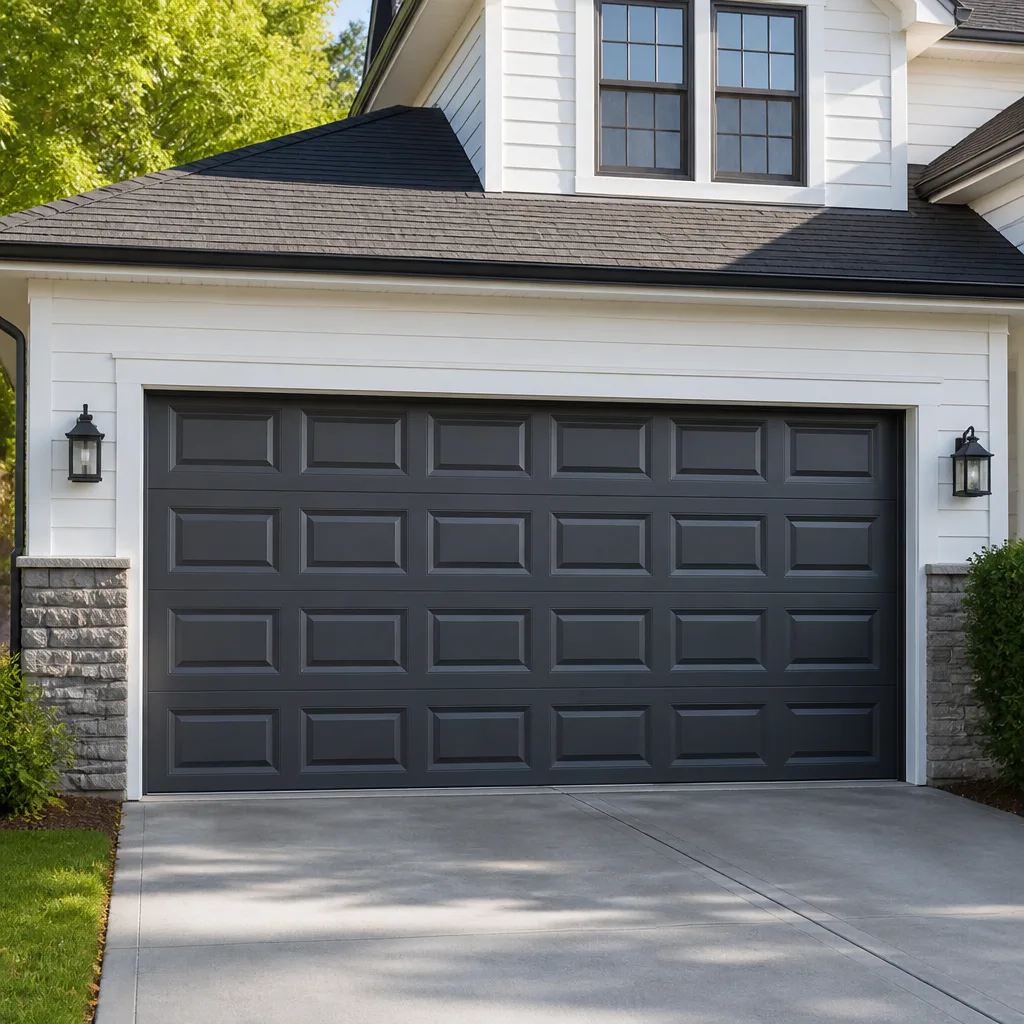 Raised-panel steel
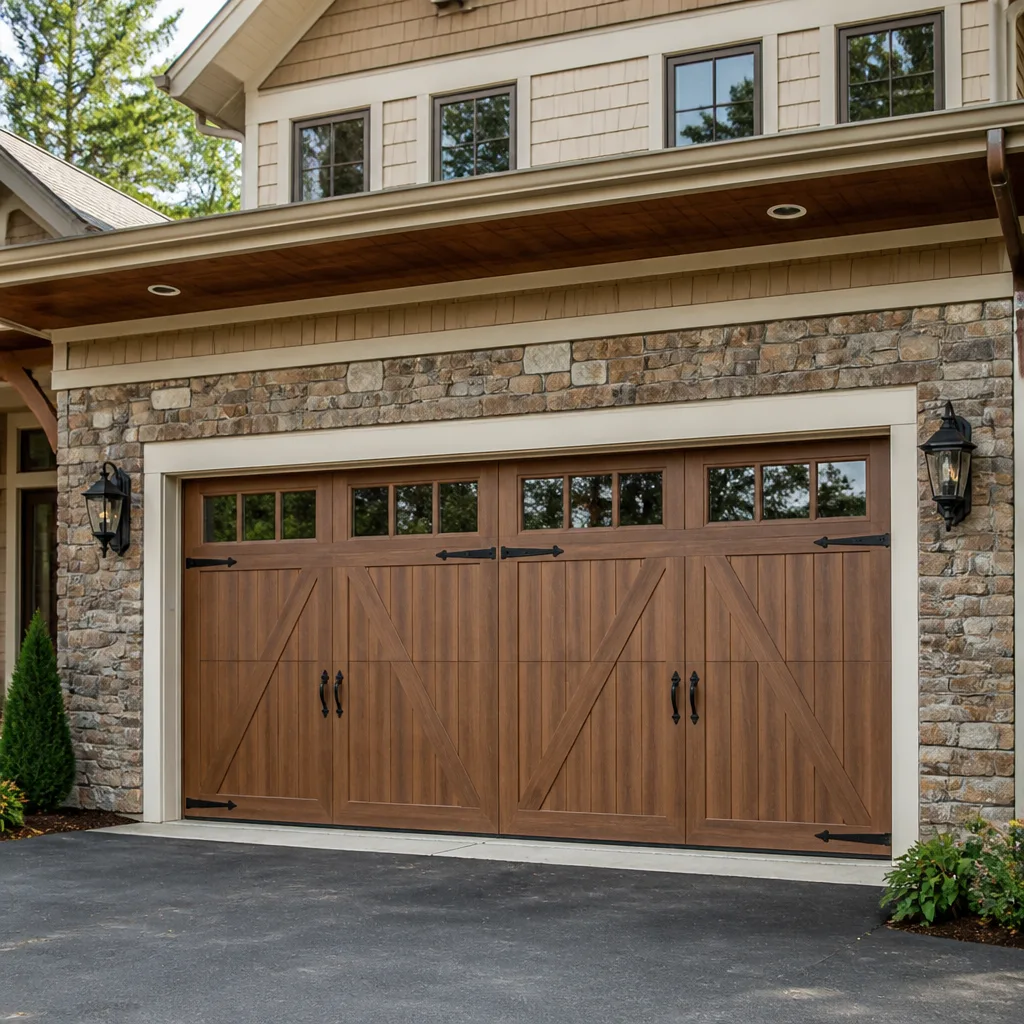 Carriage house
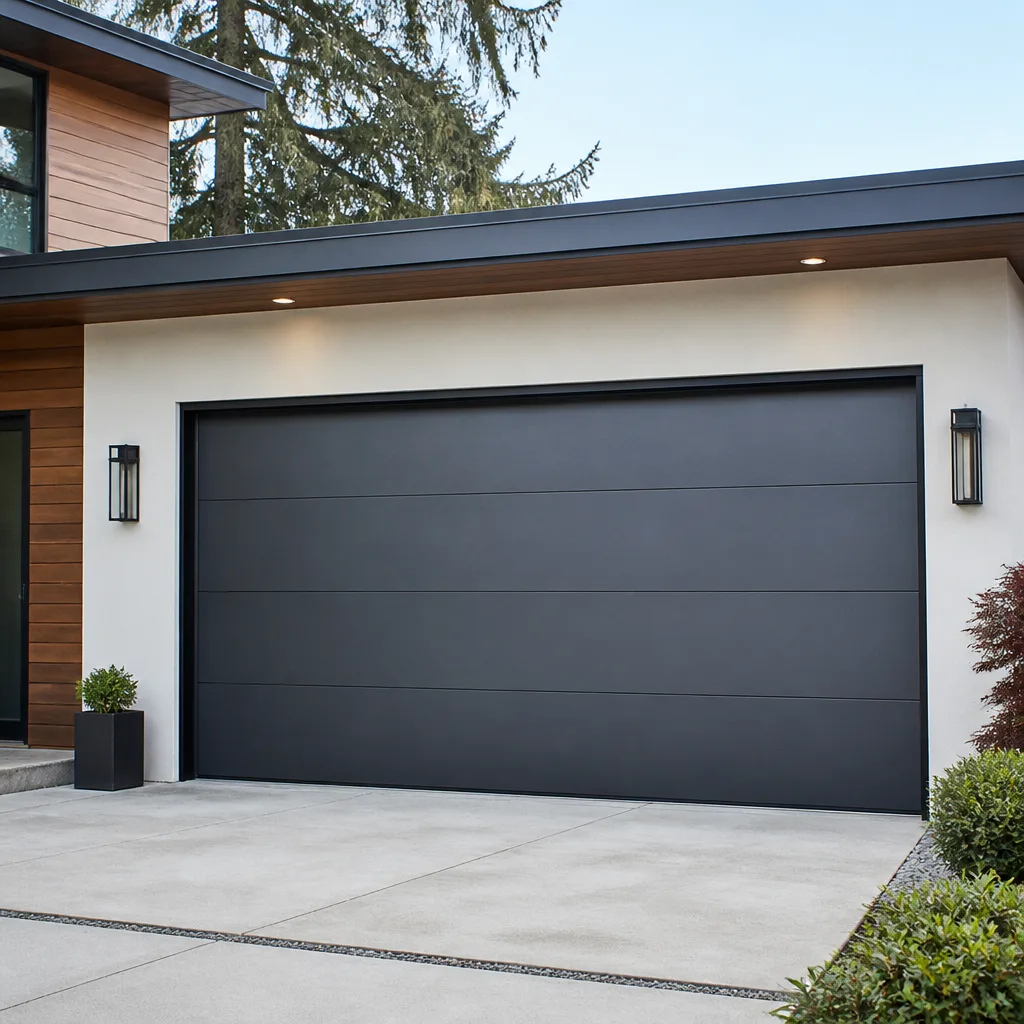 Modern flush
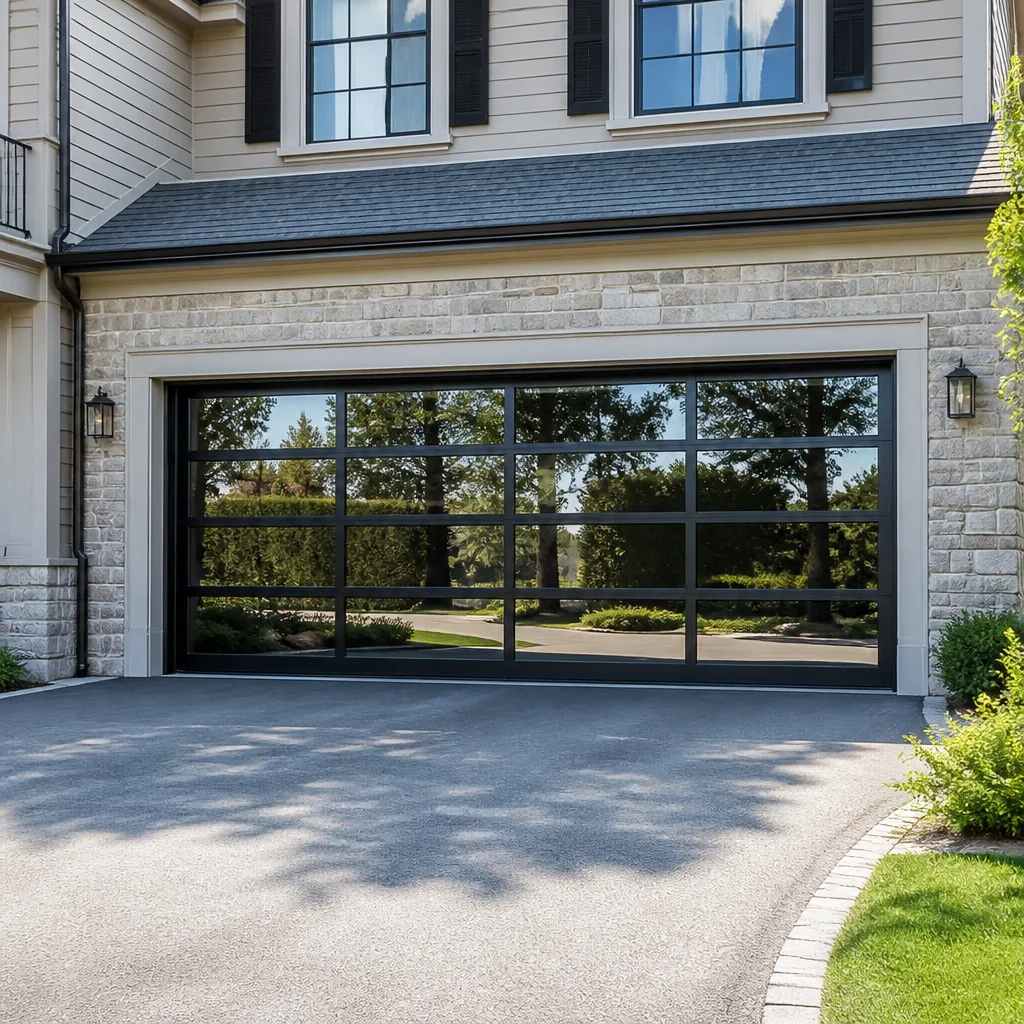 Full-view glass
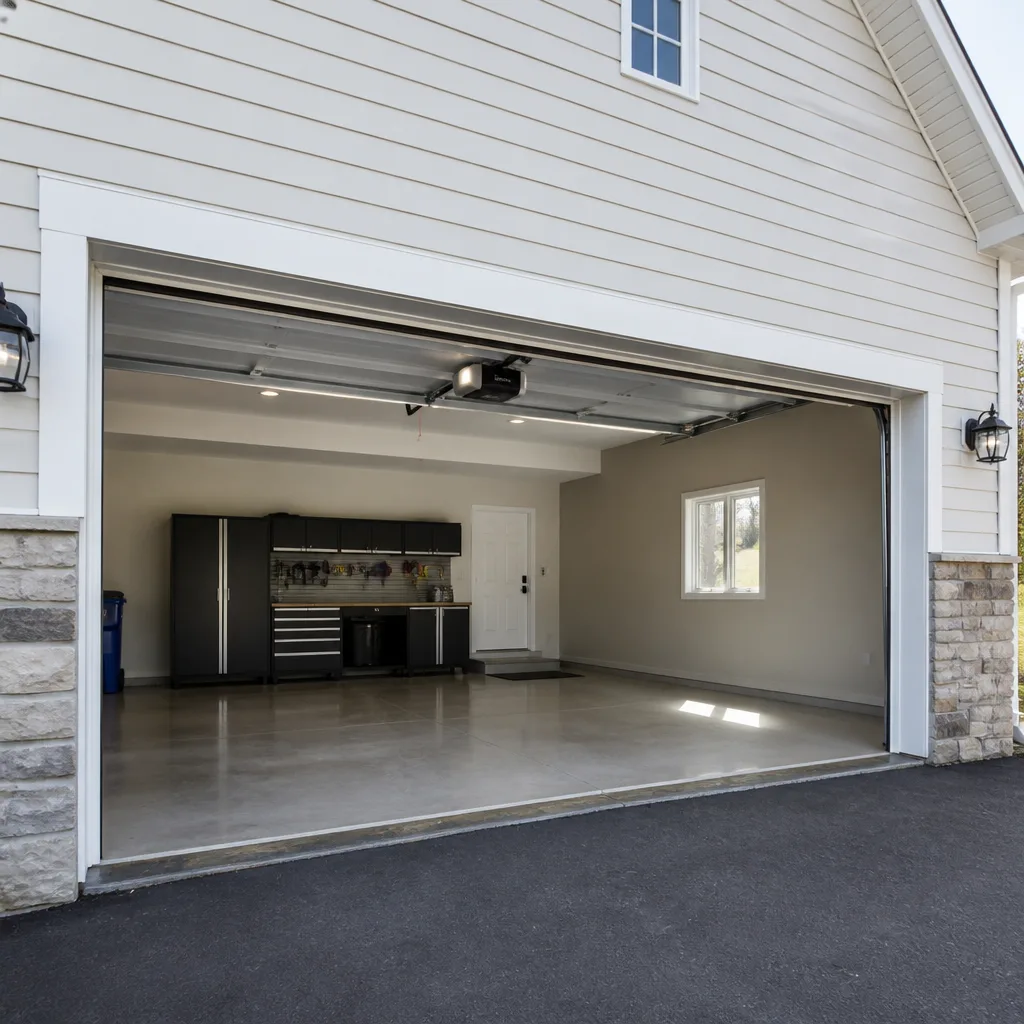 LiftMaster openers
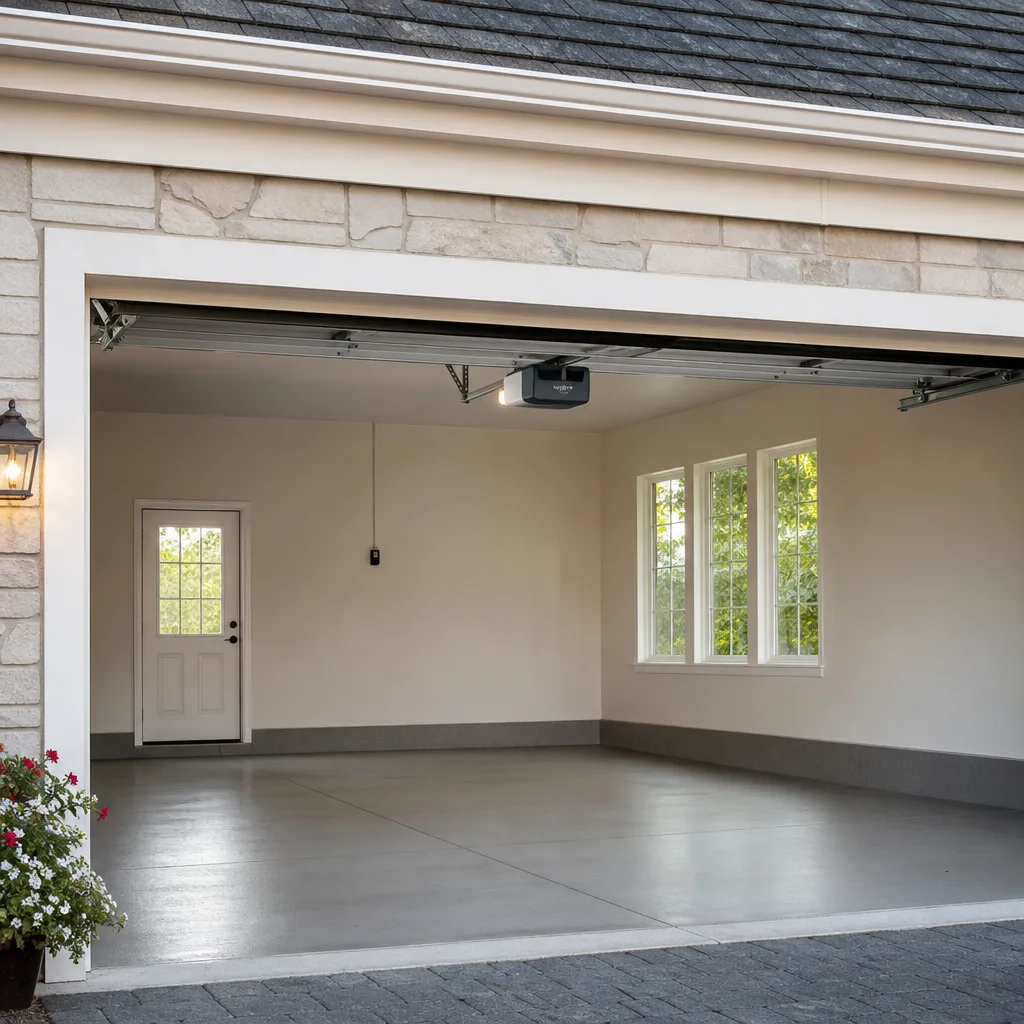 Chamberlain openers
Full 25-point door and opener safety check with every visit - springs, cables, rollers, tracks, and your LiftMaster or Chamberlain opener included
You get a price before we start. It does not change when the truck arrives.
Get your free estimateThe Complete Guide to Garage Door in Fort Worth
Your garage door opens and closes roughly 1,500 times a year. That’s more cycles than your washing machine, more moving parts than your HVAC system, and exactly zero required maintenance records. By the time a Fort Worth homeowner discovers how a torsion spring works, the door is usually half-open, the car is trapped inside, and the morning commute is already lost. This guide lays out how your garage door actually works, what fails and when, what repairs should cost in Tarrant County, and how to know when replacement beats repair. It’s the documentation your door never came with.
Quick Answer
A garage door is a counterbalanced system: torsion springs bear the door’s weight, cables guide it, rollers keep it on track, and an opener supplies the modest force needed to move it. In Fort Worth, most repair calls involve broken springs, snapped cables, or opener logic-board failures, and typical repair costs run $150 to $290 for cables, $280 to $420 for a spring pair, and $180 to $350 for opener work. A garage door should be serviced annually in this climate, and any door over 12 to 15 years old needs a repair-versus-replace calculation rather than another patch job.
Styles & brands we work with
Table of Contents
- The Anatomy of a Garage Door System
- How Fort Worth Conditions Stress Your Door
- Actual Lifespan Numbers for Every Component
- Repair vs. Replacement: The Dollar Threshold
- How to Read Your Door’s Age and Service History
- Written Estimates vs. Written Guarantees: Why You Need Both
- A Maintenance Schedule That Works in Tarrant County
- Common Mistakes to Avoid
- When to Call a Professional
- Frequently Asked Questions
The Anatomy of a Garage Door System
Most Fort Worth homes have a sectional steel door riding on a 12-gauge or 14-gauge track system. The door panel itself weighs between 130 and 240 pounds depending on width, insulation, and material. That weight never changes. What changes is the mechanism holding it up.
The Counterbalance System: Why Your Door Isn’t Heavy
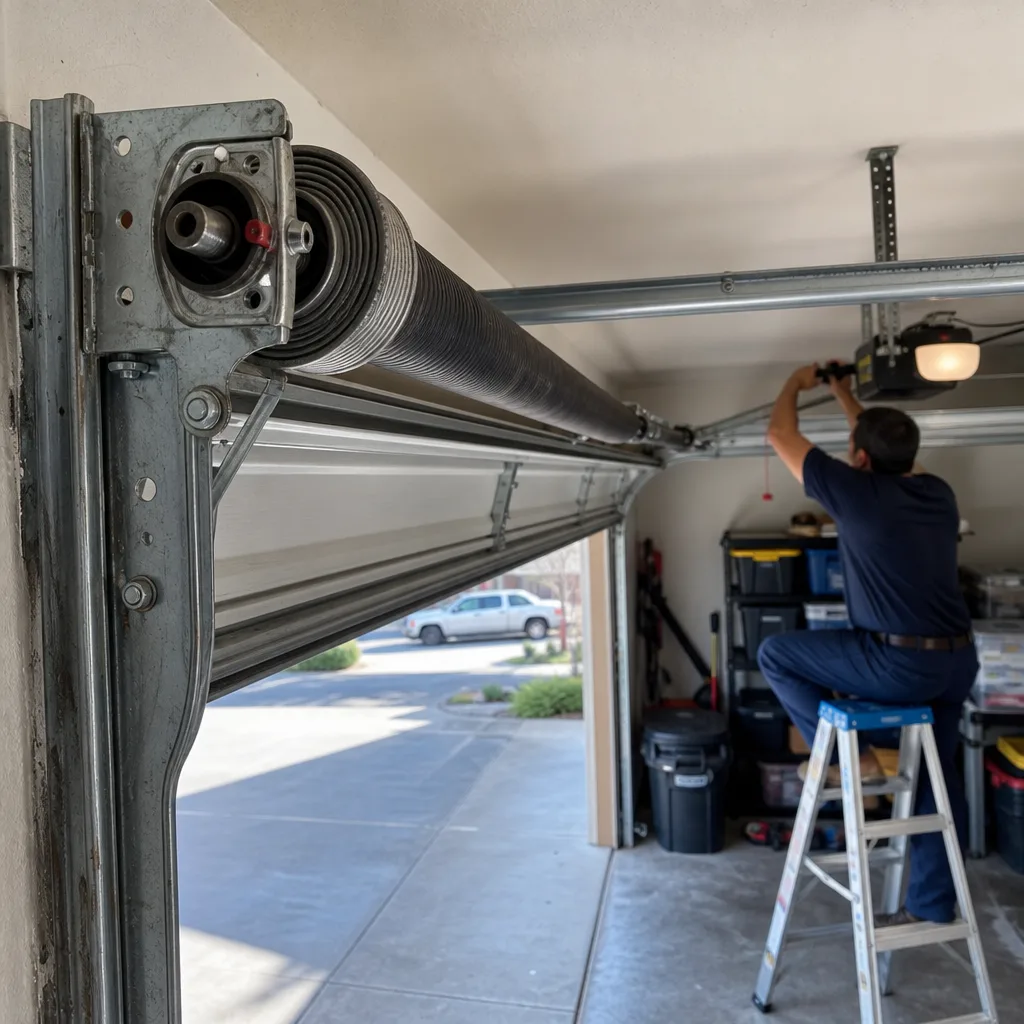
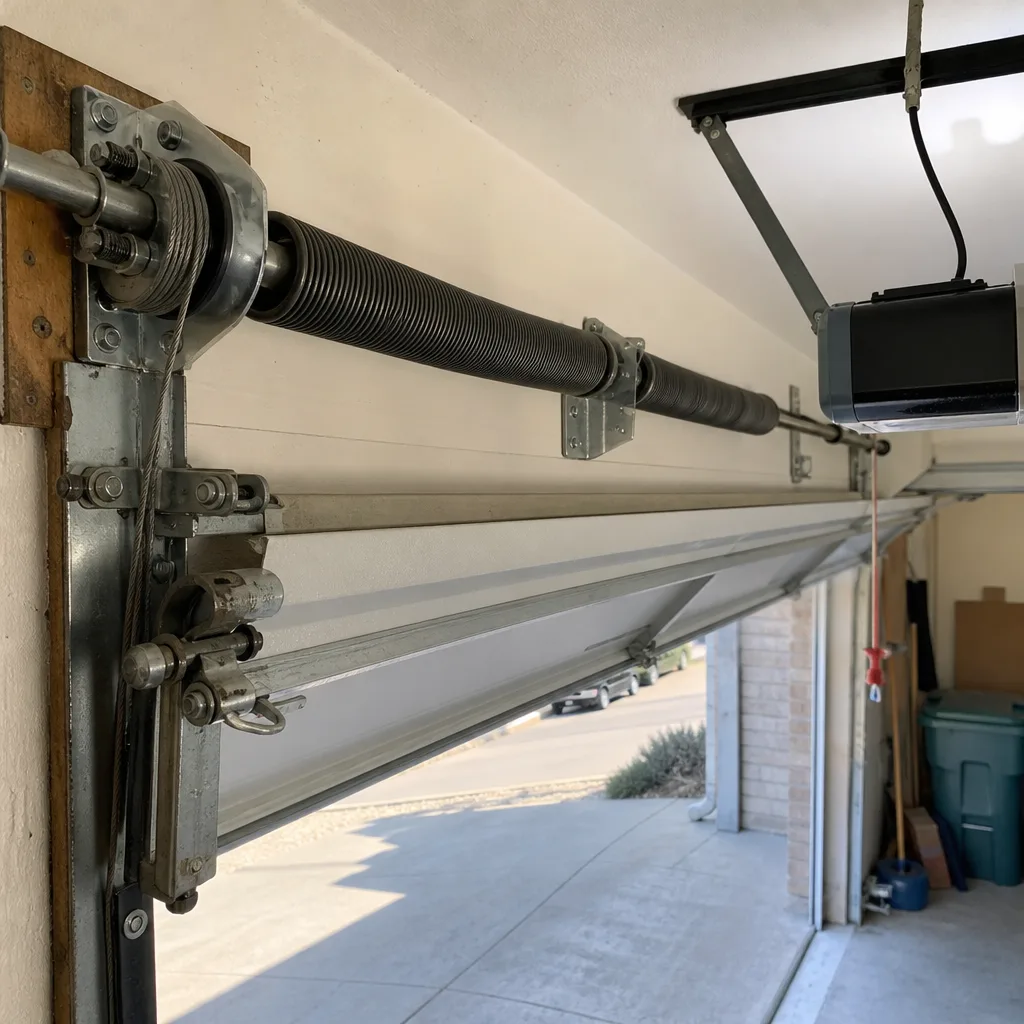
The torsion spring assembly is the core of the system. Torsion springs are the thick coiled springs mounted on a shaft above the door opening. They are wound under high tension and store the mechanical energy that lifts the door. When you press the opener button, the opener motor only moves the door a few inches before the springs take over the heavy lifting. When a spring breaks, the door instantly becomes its full dead weight: 150 to 250 pounds that no opener can lift.
Cables are the steel wires connecting the bottom of the door to the drum at each end of the spring shaft. They wrap and unwrap as the door travels. In Fort Worth’s heat, cables oxidize faster than in drier climates. We see surface rust and strand separation on cables in this market 2 to 3 years before cooler-climate cables would show the same wear.
Rollers, Hinges, and Track
Rollers carry the door along the track. Most original equipment uses steel rollers with unsealed ball bearings that wear smooth; nylon rollers with sealed bearings last twice as long and run quieter. Hinges connect panels and wear at the pivot points. Track is the structural guide: 2-inch commercial-grade track is standard for residential, and anything thinner may flex under load.
The Opener
The opener is a motor, drive mechanism, logic board, safety sensors, and remote receiver in one housing. In our Fort Worth service area, opener failures are split roughly evenly between mechanical failures (gear and sprocket wear on chain drives, belt degradation) and electrical failures (logic boards, capacitors, sensor alignment).
Key takeaway: The door panel is just a slab. The springs, cables, and opener are the system, and they each have different lifespans and failure symptoms. When the door won’t open, the first diagnostic question is which component failed.
For a deeper breakdown of the most common failure point, see our page on Garage Door Repair in Fort Worth.
How Fort Worth Conditions Stress Your Door
Tarrant County sits on expansive clay soil. That soil shrinks and swells with moisture swings: it heaves in wet springs and contracts during late-summer dry spells. The concrete slab under your garage door moves with it. Over a decade, we measure garage door openings that are 1/4 to 5/8 inch out of square from slab movement alone. That misalignment forces the door to travel slightly off-plumb, which accelerates roller wear and causes cables to spool unevenly on the drum.
Fort Worth’s summer heat is a second, quieter stressor. Torsion springs are rated in cycles: one cycle is one full open and close. A standard spring is rated for 10,000 cycles, which translates to about 7 years of use at the national average of 4 open/close cycles per day. But heat accelerates metal fatigue in spring steel. In our experience, 10,000-cycle springs in the Fort Worth metro area commonly fail at the 6 to 6.5 year mark, not year 7. High-cycle springs rated at 25,000 cycles hold up better, typically lasting 10 to 12 years here.
Weather seals take a direct hit. The bottom seal (the rubber gasket along the door’s bottom edge) dries out, cracks, and loses compression in Fort Worth summers. A brittle seal lets heat, dust, and insects into the garage, and during the spring rain season, it lets water track under the door. We replace bottom seals throughout Tarrant County year-round, but the highest concentration is June through August when UV degradation peaks.
Panels also move. Steel panels expand and contract with temperature swings. Fort Worth’s 30-degree winter mornings followed by 70-degree afternoons produce enough panel movement to loosen hinge bolts over time. Loose hinges then stress the door’s structural points, and that’s how panel cracks start.
What this means for you: a garage door in Fort Worth leads a harder life than the same door in Minneapolis or Seattle. Annual service is not optional here; it is the difference between a 7-year door and a 14-year door.
Actual Lifespan Numbers for Every Component
Every garage door component has a measurable service life. When we evaluate a door in Fort Worth, we use these benchmarks. They come from our own service history and from manufacturer published cycle ratings.
Torsion Springs
- Standard springs (10,000 cycles): 6 to 7 years in Fort Worth conditions.
- High-cycle springs (25,000 to 30,000 cycles): 12 to 15 years.
- Failure signal: a loud bang that sounds like a gunshot from the garage. The door will not lift manually. One spring broken typically means the second is near failure; replacing both as a pair is standard practice.
- Cost range in Fort Worth: $280 to $420 for a pair, including labor and a service call. Most homes have 2 springs.
Cables
- Typical life: 8 to 12 years, but Fort Worth humidity and heat cut that to 7 to 10 for exterior-facing cable runs.
- Failure signal: fraying wire strands visible near the bottom bracket or drum. Often the door binds on one side and appears crooked when operating.
- Cost range in Fort Worth: $150 to $275, depending on cable type and drum condition.
Rollers
- Steel rollers: 5 to 7 years. Wear shows as wobbly operation and a grinding track noise.
- Nylon rollers with sealed bearings: 10 to 12 years. Worth the upgrade when replacing; the cost difference is small.
- Cost range: $90 to $160 to replace all rollers on a standard 2-car door.
Opener Motor
- Chain-drive opener: 10 to 12 years of motor life with periodic gear maintenance.
- Belt-drive opener: 12 to 15 years, quieter operation, better for attached garages.
- Failure signal: motor runs but door doesn’t move (gear failure), or intermittent operation with no pattern (logic board).
- Cost range in Fort Worth: $180 to $350 for repair; $350 to $600 for a full opener replacement including installation.
Panels and Track
- Steel panel with proper maintenance: 20 to 25 years.
- Track: effectively lifetime unless physically damaged or installed out of square.
- Failure signal: dents and rust-through are panel issues; bowed track is usually physical impact, not wear.
Why these numbers matter: when a Fort Worth homeowner calls about a door that “suddenly stopped working,” the component’s age tells us what likely failed before we arrive. A 6-year-old door with original springs and a loud bang is a spring failure. A 4-year-old door that works intermittently is an opener logic board. Knowing the lifespan before you call puts you in a stronger negotiating position and helps you understand what the technician is telling you.
For opener-specific failure patterns, see Garage Door Opener Repair in Fort Worth.
Repair vs. Replacement: The Dollar Threshold
Garage door repair in Fort Worth covers individual component failures: springs, cables, rollers, hinges, the operator, safety sensors. Replacement means a new door, new track, and usually new springs. The decision is not emotional; it is arithmetic.
The Rule We Apply
- If the door panel itself is structurally sound and the frame is square, repair the failed component.
- If the panel is rusted through, dented, or has cracks at the hinge points, replacing the panel on a sectional door rarely makes sense: the new panel won’t match the faded color of adjacent panels. Replace the door.
- If the springs, cables, and opener are all within 1 to 2 years of their lifespan numbers, the cumulative replacement cost will exceed 40 percent of the cost of a new door. Replace on the schedule you choose rather than the schedule the failures choose for you.
Dollar Thresholds
- Cable repair: $150 to $275. Repair wins. Always, unless the door is already failing elsewhere.
- Spring pair replacement: $280 to $420. Repair wins on doors under 12 years old. On doors 12 to 15 years old with other wear, replacement enters the conversation.
- Opener replacement: $350 to $600. Repair wins if the opener is under 8 years old. Replace if the opener is beyond its lifespan and the door is near replacement too; it’s cheaper to do both at once than separately.
- Full door replacement including springs, track, and installation: $1,100 to $2,800 in Fort Worth for a standard 2-car door, depending on material, insulation, and window options. At this point, the decision is about long-term value, not emergency cost.
When Replacement Clearly Wins
- The door has visible rust-through at panel joints. Surface rust can be treated; rust-through is structural.
- Two or more panels are damaged, or one panel is badly creased at a hinge point.
- The door is 20 or more years old and any major component has failed. The remaining components will follow soon.
- You want insulation in an attached garage. Most pre-2005 Fort Worth doors are non-insulated steel; adding aftermarket insulation kits is a stopgap, not a long-term fix.
Our advice in Fort Worth: if repair costs exceed half the price of a new door, and your door is beyond 60 percent of its useful life, replacement is the honest answer. A technician who only gives you the patch-job option is not doing their job.
How to Read Your Door’s Age and Service History
Most Fort Worth homeowners have no paperwork for their garage door. The house came with it. No manual, no install date, no service records. That’s normal. But the door itself carries data, if you know where to look.
Step 1: Check the Manufacturer Label
- Look at the edges of the top and bottom panels. Manufacturers such as Clopay, Amarr, and Wayne Dalton place a label or metal tag on the door edge or the track near the top.
- The label carries a model number and sometimes a serial or date code. Some Clopay and Amarr doors have 4-digit date codes; a call to the manufacturer with the serial can confirm the production date.
- If the label is painted over, check the bottom rubber seal. Some manufacturers mold their name into the seal. That tells you the door brand, which narrows the era.
Step 2: Read the Springs
- Look at the color-coded paint on the stationary cone of the torsion spring. Manufacturers use color codes for wire size, not age, but the color tells you what cycle rating was installed.
- Remove the spring cover and look for a date stamp or cycle rating etched on the spring. High-cycle springs (25,000 and up) are often marked with the rating.
- If the springs are unpainted, unwound, and have visible wear, assume originals. That dates the door if you can date the house’s construction or the previous owner’s major renovations.
Step 3: Inspect the Opener Model
- Craftsman, LiftMaster, and Chamberlain openers have model numbers on the motor housing. Craftsman date codes are common; LiftMaster’s model numbering roughly tracks production years within a series.
- If the opener uses a keypad with a blinking LED and has no MyQ or Wi-Fi capability, it’s likely pre-2010. That’s a useful rough dating signal.
- The safety sensor style matters too. Pre-1993 openers had no electric eye sensors; any door without them needs an opener upgrade for safety compliance.
Putting it together: a 2012-built home with original 10,000-cycle springs has a door that is statistically due for spring failure in Fort Worth. A homeowner who knows this before a failure means we can schedule spring replacement on their timeline, not on the morning the door won’t open.
Written Estimates vs. Written Guarantees: Why You Need Both
Here is the Garage Door Permits, Codes & Inspections in TX: What You Need to Know breakdown every Fort Worth homeowner needs to understand, because most are surprised by it. A verbal estimate is not an estimate. It is a conversation. A written estimate is a document with the price, the scope, and the parts listed. A written guarantee is a separate document that says if the repair fails within a defined period, the company returns and corrects it at no charge.
In our service area, homeowners routinely receive one without the other. A technician will quote a price verbally and then either not put it in writing, or put a price in writing but offer no guarantee beyond “I’ll come back if there’s a problem.” Both are red flags.
What a Written Estimate Should Include
- The specific parts being replaced, with part numbers where applicable.
- The price for parts and labor, separated.
- The total price, in dollars.
- The expected completion time.
- Any conditions that could change the price, stated before work begins, not after.
What a Written Guarantee Should Include
- The duration (we guarantee every repair for 365 days in writing).
- The specific work covered (what was repaired).
- What happens if it fails (we return and fix it, no charge).
- Any exclusions (damage caused by impact, tampering, or unrelated failures).
At Brock Garage Doors Fort Worth, every job gets both. The price is written before any work starts, and the 365-Day Done Right Promise is in writing on every repair. If the repair fails within the year, we return and make it right. No negotiation, no fee, no second invoice. That’s what the word guarantee means, and we hold to it.
For the repair service itself, see Garage Door Repair in Fort Worth.
A Maintenance Schedule That Works in Tarrant County
If you do nothing else from this guide, do this. Annual service on a garage door takes one technician about 45 minutes and costs significantly less than a spring failure or a snapped cable call. Here is the schedule we recommend to every Fort Worth homeowner.
Every 6 Months (Spring and Fall)
- Inspect the bottom seal for cracking, compression, and daylight. Replace before the rainy season or the first 100°F week.
- Check cable condition at the bottom bracket and drum. Look for frayed strands or surface rust.
- Operate the door and listen. Grinding means roller bearings. Squealing means hinge friction. A change in sound is the early warning.
Every 12 Months (Annual Service)
- Tighten all hinge bolts and track bolts. Fort Worth temperature swings loosen them faster than most climates.
- Lubricate springs, hinges, and rollers with a silicone-based garage door lubricant. Do not use WD-40; it is a solvent, not a lubricant, and it will wash out the factory grease.
- Balance test: disconnect the opener and lift the door manually. It should stay put at the half-open point. If it falls or rises, the springs are wearing unevenly.
- Check the safety sensor alignment and the auto-reverse function. This is a safety item, not a convenience item.
- Clear the track of debris and confirm the track is still square.
Every 3 to 5 Years
- Replace rollers if they are steel and original.
- Replace the bottom seal.
- Have the opener gear and sprocket inspected if it is a chain-drive unit.
Fort Worth specific advice: schedule the annual service in late September or early October. That catches summer heat damage before the first cold snap, and it means the door is tuned up before the holiday season when it gets the heaviest use.
Common Mistakes to Avoid
- Lubricating with WD-40. It’s a penetrating oil, not a garage door lubricant. It actually strips existing lubrication from springs and hinge pins. Use a silicone or white lithium garage door spray.
- Replacing one torsion spring instead of both. The second spring has the same cycle count as the first. Replacing only the broken one means you will pay another service call within months. We always replace springs in matched pairs.
- Ignoring the annual balance test. A door that won’t hold at the half-open point is telling you the springs are failing. Waiting until the loud bang costs more and strands your car.
- Hiring a handyman for spring replacement. Torsion springs hold hundreds of pounds of stored energy. They can cause serious injury or death when mishandled. This is not a weekend project. State licensing and proper winding bars are non-negotiable.
- Patching a rusted-through panel. Surface rust can be sanded and painted. Rust-through means the panel has lost structural integrity, and patch kits don’t restore it. The panel will continue to degrade and eventually bind.
- Accepting a verbal estimate. Without the price in writing, the invoice can grow. The number should be on paper before a single bolt turns. That’s how we run every job in Fort Worth.
- Disconnecting the auto-reverse sensor because it “keeps stopping the door.” The sensor is paired to the door for a reason. If it trips repeatedly, the track is out of square or the sensor is misaligned. Fix the alignment, not the safety system.
When to Call a Professional
Any time the torsion springs are involved, call a professional. The spring assembly holds extreme tension, and when springs break, that tension is still in the system. Cables are close behind: a cable under load can snap and whip, and the door can drop unbalanced. If your door is off its track, if the opener operates erratically, or if you hear a grinding or popping sound that wasn’t there before, those are the moments to stop using the door and make the call. Same for any safety system concern: sensors, auto-reverse, or the opener’s force setting. These are safety devices, not conveniences.
Brock Garage Doors Fort Worth offers free estimates throughout the Fort Worth area call (682) 730-8314 and a live person answers.
Frequently Asked Questions
Most garage door repairs in Fort Worth cost between $150 and $450, depending on the failed component. Cable repairs run $150 to $275, spring pair replacements run $280 to $420, and opener repairs run $180 to $350. The full price is written before any work starts, so the number you approve is the number you pay. Call (682) 730-8314 for an exact quote on your door.
Standard 10,000-cycle torsion springs last 6 to 7 years in Fort Worth’s heat. High-cycle springs rated at 25,000 or 30,000 cycles last 12 to 15 years. The heat accelerates metal fatigue, so Texas springs fail 1 to 2 years sooner than the same spring in cooler climates.
Most spring, cable, and roller repairs are same-day jobs. We stock the common parts for Clopay, Amarr, Wayne Dalton, and Craftsman doors on the truck, so the technician can usually complete the work in one visit. Opener replacements sometimes require a specific model, which can add a day if we don’t have it on hand. Call (682) 730-8314 and a live person picks up, 24 hours a day.
It depends on the component. A 15-year-old door with a broken spring is worth repairing if the panel is in good shape and the opener is still functional. A 15-year-old door with failed springs, worn cables, and a dead opener is beyond the repair threshold: the cumulative repair cost will exceed 40 percent of a new door, and the remaining components will keep failing. We will give you the straight repair-versus-replace answer, not the answer that sells a bigger invoice.
Fort Worth’s version of cold weather is cold enough to thicken the lubricant in the rollers and hinge pins, and it makes weather seals stiffer. If the door jerks only in winter mornings and settles down by midday, it’s usually thickened lubricant. If it jerks or binds in all weather, you have a spring tension issue, a cable spooling problem, or a roller that’s wearing out.
Yes. Every repair from Brock Garage Doors Fort Worth includes the 365-Day Done Right Promise in writing. If the repair fails within the year, we return and correct it at no charge. That guarantee is not a verbal promise; it is on the work order. For cable work specifically, see Garage Door Cable Repair in Fort Worth.
The Bottom Line
Your garage door is a mechanical system with measurable lifespans, and in Fort Worth, those lifespans run shorter than the national averages. Torsion springs fail at 6 to 7 years instead of 7 to 8. Cables oxidize faster in Tarrant County humidity. Slab movement from clay soil knocks doors out of square and accelerates roller wear. The answer is not to wait for the loud bang: it is to read your door’s age, follow an annual maintenance schedule, and demand written pricing and a written guarantee on every repair. That’s how a garage door becomes a 15-year asset instead of an annual emergency. If you have questions about your specific door, call our Brock Garage Doors Fort Worth home team at (682) 730-8314. We’ll send a technician who shows up in the window, puts the price in writing, and stands behind the work for a year.
Written by Wade Mercer, Owner at Brock Garage Doors Fort Worth, serving Fort Worth since 2001. For more guides & resources, visit our blog.
See the difference
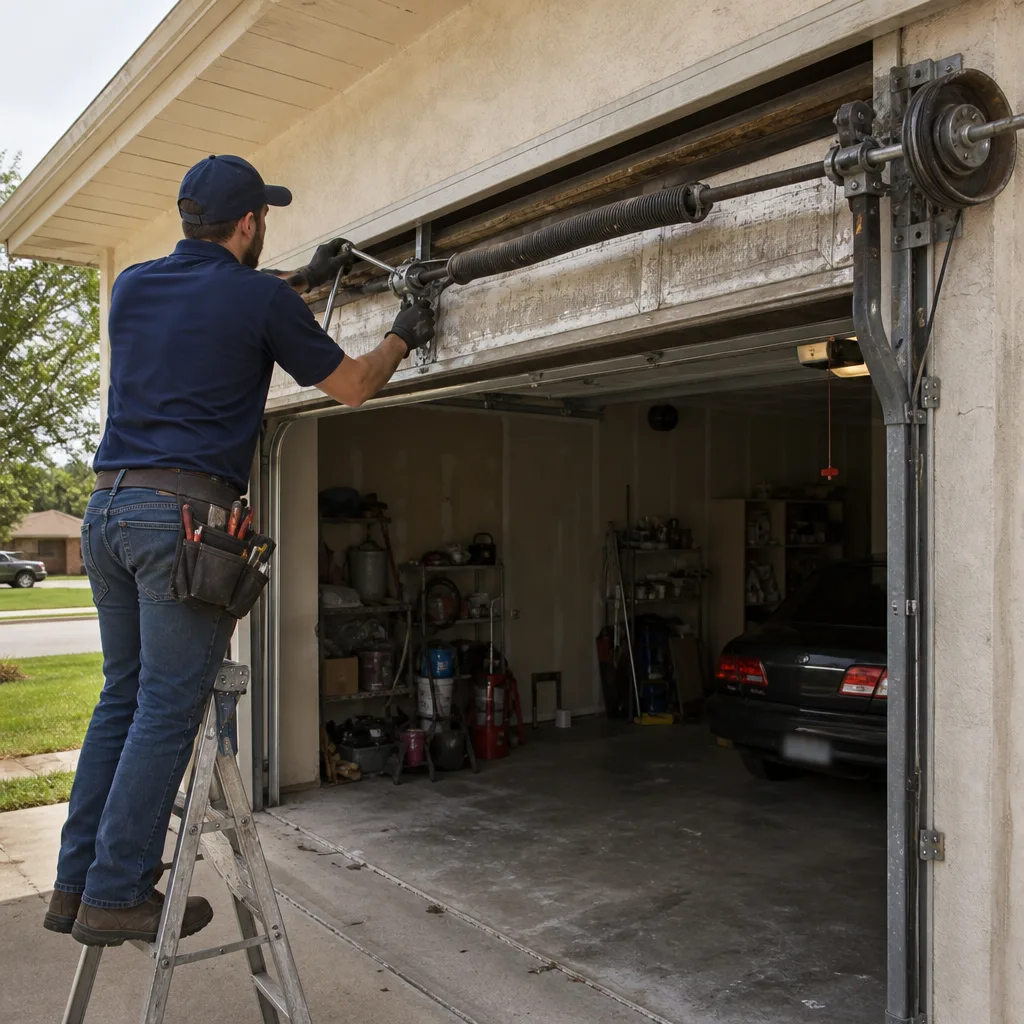 Before
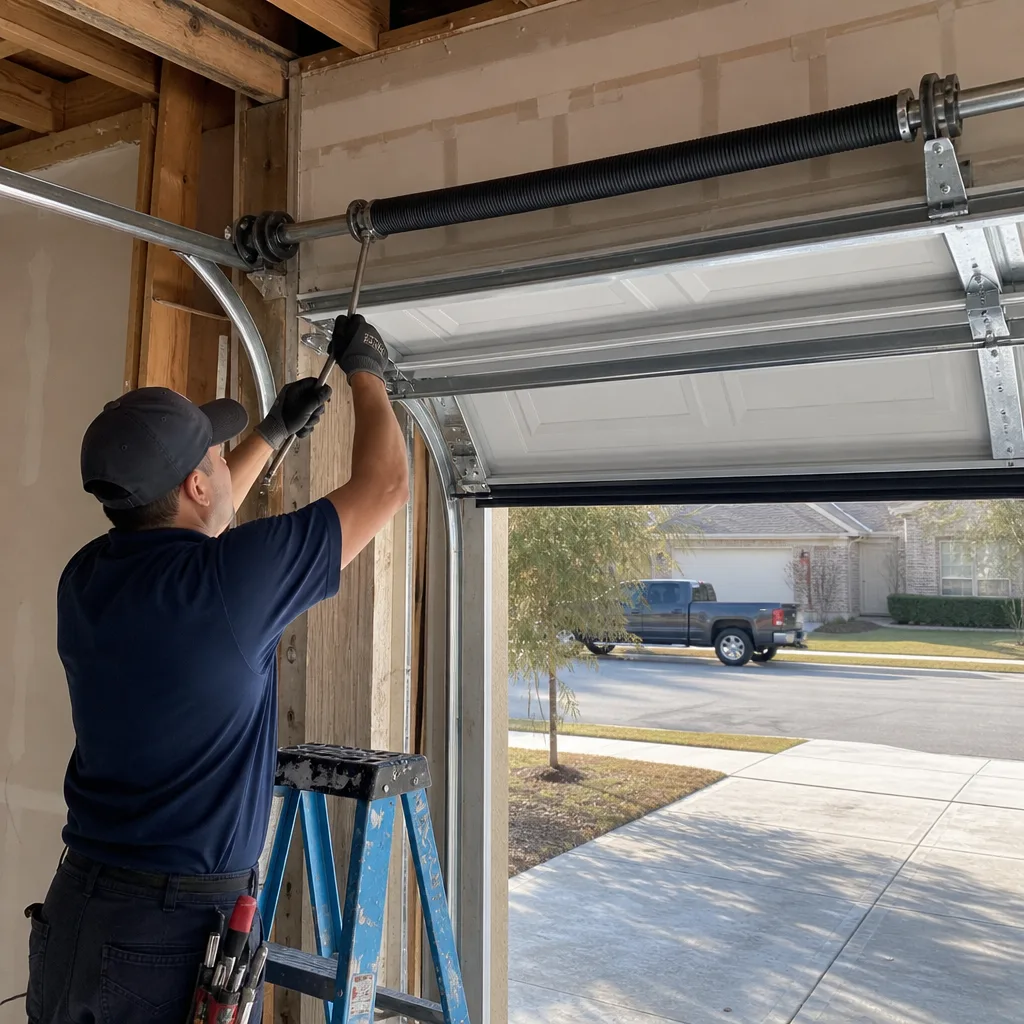 After
After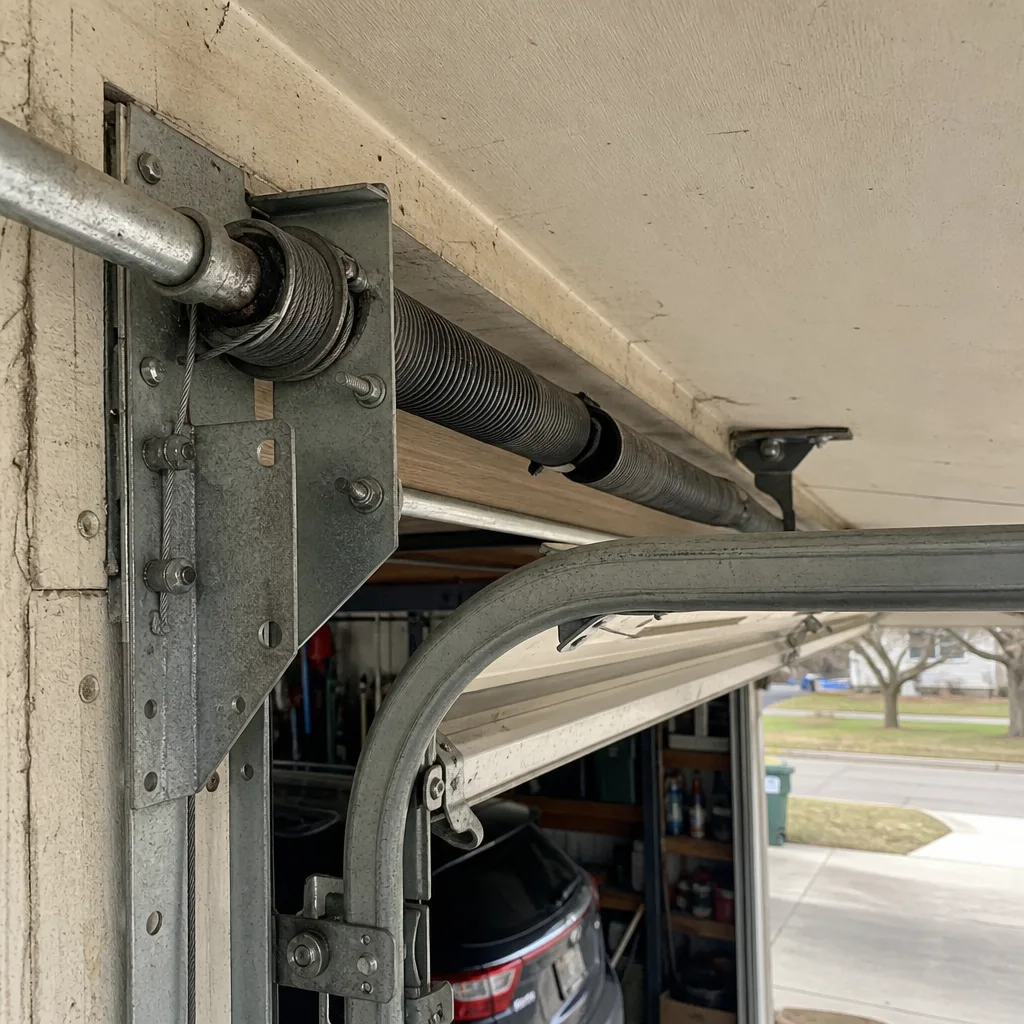 Before
 After
After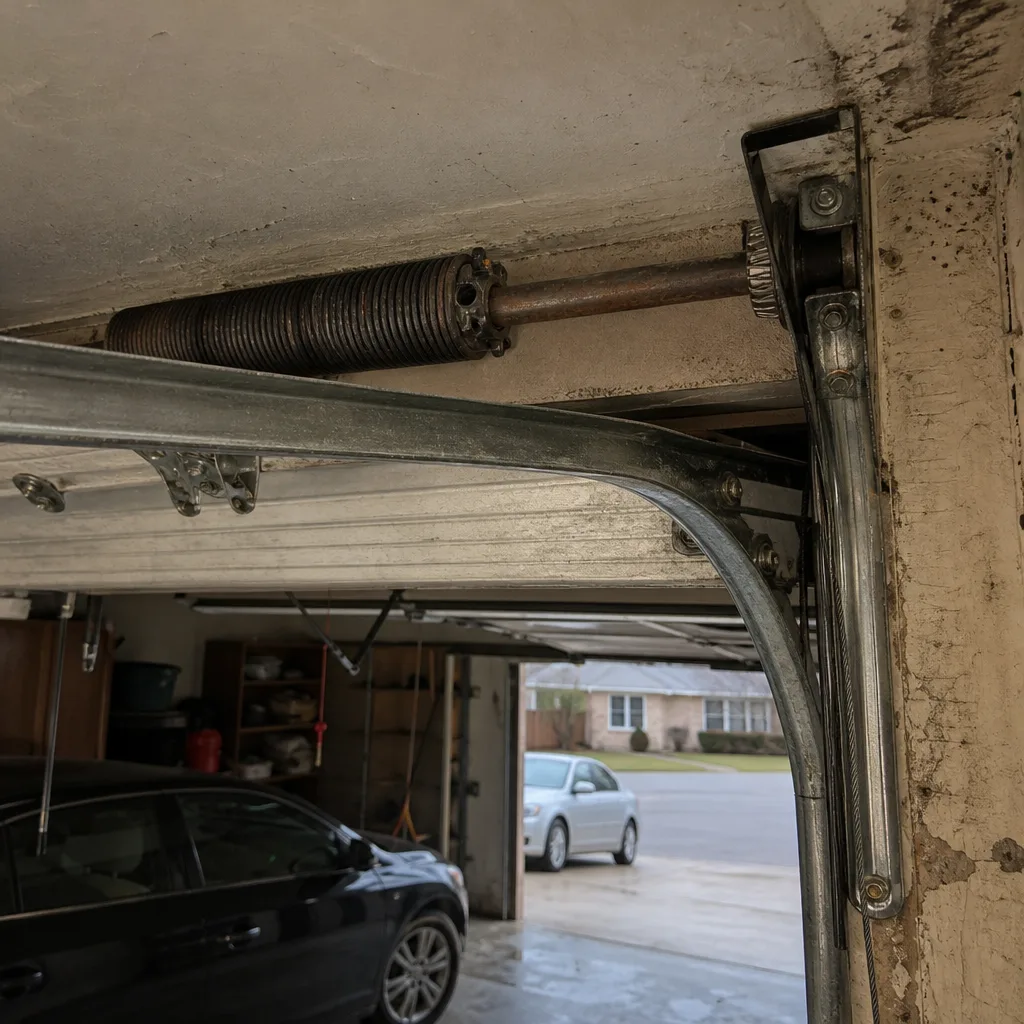 Before
 After
After